
Mobile Marketing for Local Businesses: The Three Things That Actually Move Revenue

Summarize with AI
That is a narrower answer than most articles on this topic will give you, and it is narrow on purpose.
Why the usual advice does not fit
Search "mobile marketing for local business" and you get lists: SMS campaigns, geofencing, in-app advertising, push notifications, QR codes, mobile wallet coupons, location-based ads.
Some of that works. Most of it is capacity a national brand has and a fourteen-person business in Hialeah does not. Running an SMS program properly means compliance, list management, and somebody writing messages every week. Geofencing campaigns need budget and a media buyer. Push notifications need an app, and you do not need an app.
Meanwhile the thing that determines whether a person a mile away calls you or calls a competitor is usually decided in about eleven seconds on a phone screen, before any of those tactics enter the picture.
What the numbers actually say
The behavior worth building around is local, mobile and immediate:
- 82% of smartphone users run "near me" searches, and 88% of near-me searches happen on mobile (BizIQ, 2026)
- 76% of people who search for something nearby visit a business within 24 hours (BizIQ, 2026)
- 28% of local searches result in a purchase within 24 hours (BizIQ, 2026)
- Mobile is roughly 55% to 64% of all web traffic, and higher for local service categories
- 58% of companies still do not optimize for local search (BizIQ, 2026)
Read those together and the picture is specific. The person searching on a phone for a business near them is not researching. They are deciding, and they will act today. The window is short and the competition is whoever else appears on that screen.
That last statistic is the opportunity. More than half your competitors are not doing this.

Priority 1: Google Business Profile
On a phone, the local pack occupies most of the first screen. Three listings, with a call button and a directions button, sitting above every organic website result including yours.
For a local business, that panel is the mobile homepage. Your actual website is the second thing people see, if they get there.
What matters, in order:
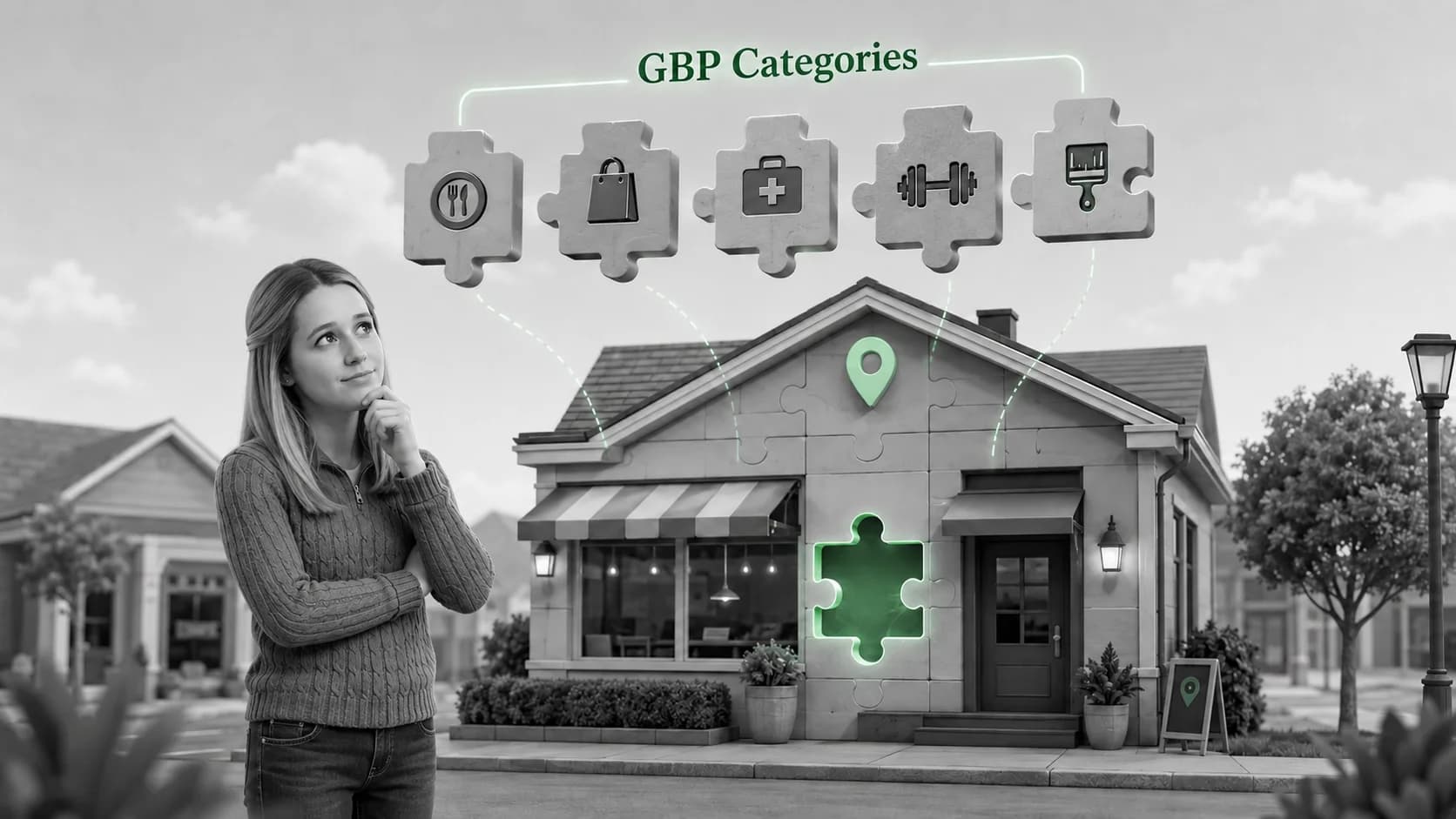
Primary category. The single biggest lever on which searches you appear for, and the most commonly gotten wrong. We wrote a full breakdown on how to choose your Google Business Profile category because the difference between two plausible-sounding categories can be most of your local visibility.
Hours that are correct, including holidays. "Open now near me" searches have grown more than 400% globally. If your hours are wrong you are filtered out of the search entirely, and nobody tells you.
Photos, added regularly. Profiles with current photos get more engagement. This is a fifteen minute monthly job that most businesses never do.
Reviews, and replies to them. On a phone, the star rating and the review count are visible before anything else. Replying matters as much as receiving, because it is the only signal a stranger has that somebody is home.
Do this before touching your website. If your profile is wrong, traffic to a beautiful site is traffic you never got. Getting the whole profile right is a job in itself, and it is what our Google Business Profile optimization service does. If you run more than one location, the coordination problem is its own subject and we covered it in local SEO for multiple locations.
Priority 2: mobile page speed
When somebody does tap through to your site, you have a few seconds.
Google indexes mobile-first, which means the mobile version of your page is the version that gets ranked, not a fallback. And Core Web Vitals are measured on real mobile visits, so a site that tests well on your desktop can be failing for every actual visitor.
The three things that break local business sites on mobile, in the order we find them:
- Unoptimized images. A 4MB hero photo from a phone camera, uploaded directly. This is the most common and the easiest fix.
- Too many third-party scripts. Chat widget, booking tool, review widget, three tracking pixels, a font service. Each one adds load time. If you cannot name what a script does, remove it.
- Layout shift. The page loads, you go to tap the phone number, an ad or image finishes loading and the button moves. Every one of those is a lost call.
Test your own site on a phone, on cellular data, away from your office wifi. That is what your customer experiences. We treat this as a baseline requirement in our web design work, because a fast local site is worth more than a clever one.
Priority 3: make calling trivial
For most local service businesses, the conversion is a phone call. Not a form, not a chat.
Which means the design question is whether a person can call you in one tap from any screen of your site.
- Phone number in the header, as a
tel:link so tapping it dials - Repeated at the bottom of every page, because people scroll
- A sticky call button on mobile, which is unfashionable and works
- Address as a link that opens the map app, not as plain text
Then track it. Set up the phone tap as a key event in GA4 so you can see which pages and which channels produce calls. Most local businesses cannot answer "how many calls did the website generate last month", and it is a fifteen minute setup. Our guide on how to track website traffic covers where that lives.
What a device-split heatmap will tell you
One diagnostic worth running before you change anything.
Pull a heatmap of your top landing page filtered to mobile only. Not blended with desktop, mobile only, because a blended heatmap describes a page that nobody actually saw.
What it usually reveals: the call button that sits comfortably in view on a monitor is three scrolls down on a phone, and the navigation that gets a third of desktop clicks is inside a hamburger menu almost nobody opens. Both of those are fixable in an afternoon once you have seen them, and neither is visible in GA4.
Free tools do this. We covered the options and what device-split heatmaps show you separately.
Common questions
What percentage of local searches are on mobile?
Around 88% of "near me" searches happen on mobile, and mobile is roughly 55% to 64% of overall web traffic. For local service categories the mobile share of searches with local intent is higher than the general figure.
Does mobile page speed affect local rankings?
Yes, indirectly and directly. Google indexes mobile-first, so the mobile version is what gets evaluated, and Core Web Vitals are a ranking consideration measured on real visits. The larger effect is on conversion: a slow page loses people who already found you.
Should a local business use SMS marketing?
Only with an existing customer list, proper consent, and somebody committed to running it. It works well for appointment reminders and reactivation. It is a poor acquisition channel for a local business and it carries real compliance obligations.
Do I need a mobile app?
Almost certainly not. Apps require a reason for someone to install and reopen them, which very few local businesses have. The money is better spent making the mobile website fast and the profile accurate.
What about QR codes?
Useful for bridging offline to online: a table tent, a vehicle wrap, a mailer. Always point them at a tagged URL so the traffic does not land in Direct in your analytics, which is where most QR traffic goes to die.
Where to start on Monday
Open your phone. Search for what you sell plus your city. Look at what comes up before your website does.
Then tap into your own site from that result and time it. Try to call yourself in one tap. Try to find your hours.
Whatever failed in that thirty second exercise is your mobile marketing priority, and it will almost always be one of the three above rather than anything on a tactics list.
We do this walkthrough on every local audit and it is remarkable how often the finding has nothing to do with marketing: a wrong category, a 6MB image, or a phone number that is a picture instead of a link. It is the first thing we run in our local SEO services in Hialeah, Florida.
What does a customer a mile away actually see?
Send us your business name and we will run the phone test on it and tell you what comes up before your website does.
Written by J Raydel Sanchez, Founder and CEO of tamer Marketing, a digital marketing agency in Hialeah, Florida.