

Landing Page Design in Miami Built to Turn Campaign Traffic Into Leads
Your ads should not send potential customers to a page that makes them search for the offer again. tamer Marketing plans, writes, designs and develops focused landing pages that connect the campaign promise to a clear next step, whether that is a form, a phone call, a booking, or a purchase.
Based in Hialeah, serving Miami, Miami-Dade and South Florida.
Your Campaign Does Not End When Someone Clicks the Ad
A paid click buys you a few seconds of attention, and nothing more. What happens next depends on whether the destination continues the same conversation that began in the ad.
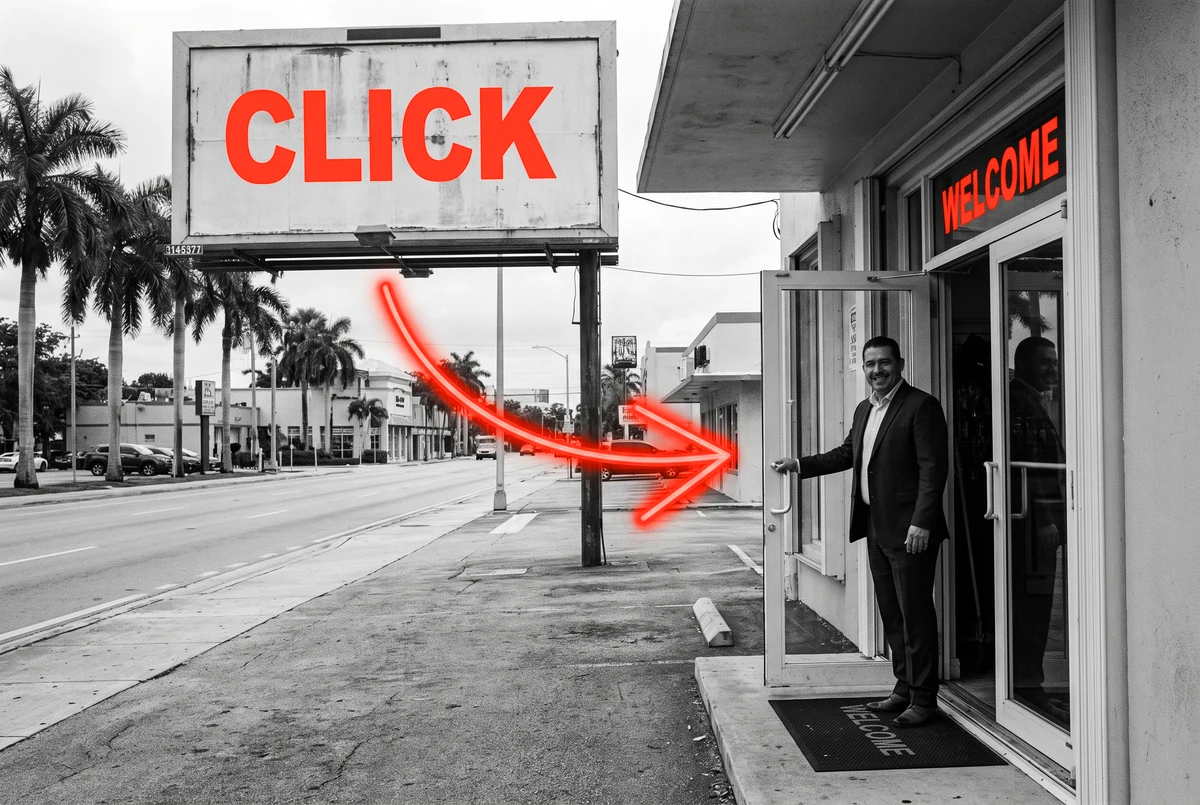
When campaign traffic lands on a homepage, the visitor often has to locate the right service, interpret a general company message and decide which path to follow. That creates unnecessary work between the click and the conversion. The business pays for the visit, but the page asks the visitor to start the search all over again.
A dedicated landing page narrows that experience. It presents the exact offer, explains why it matters, answers the objections connected to that offer and guides the visitor toward one primary action. It also makes the campaign easier to measure because calls, forms and bookings can be tied to a specific message and traffic source. The page is one half of the work; the other is the traffic feeding it, so it pays to build a complete paid media strategy around it and to estimate the ROI of your paid campaign before you scale spend.
The ad and page tell different stories
The visitor clicks for one promise and arrives on a page that speaks broadly about the company instead of continuing that promise.
The page creates too many decisions
Menus, unrelated services and competing buttons pull attention away from the action the campaign is supposed to produce.
The form adds friction too early
Fields are requested before the page has built enough relevance, trust or motivation for the visitor to complete them.
The offer is difficult to understand
The page describes features but does not make the outcome, audience or reason to act clear enough.
Trust appears too late
Reviews, credentials, guarantees and process details are missing or placed after the visitor has already decided to leave.
The campaign cannot be measured cleanly
Forms, calls and bookings are not configured as reliable conversion events, leaving the team unsure which traffic creates real opportunities.
What Conversion-Focused Landing Page Design Actually Means
Conversion-focused means every major decision, from the headline to the form, supports the same audience, offer and next step.
Continue the promise that earned the click
The headline, opening message and visual direction should feel like a natural continuation of the ad, email or promotion that sent the visitor. A user searching for one specific service should not land on a broad corporate introduction.
We align the page with the traffic source, search intent, audience language and campaign offer so visitors immediately understand that they are in the right place.
Give the visitor a clear action without oversimplifying the page
A landing page can contain detailed information, multiple sections and repeated calls to action. What it should not contain is a collection of unrelated goals competing for attention.
We define one primary conversion, such as requesting a quote, scheduling an appointment, or starting a purchase, and organize the entire page around helping the visitor make that decision.
Remove obstacles that do not help the decision
Friction can come from slow loading, unclear copy, small mobile buttons, a long form, weak hierarchy or too many exits. Not every element should be removed; it should earn its place by helping the visitor understand, trust or act.
We simplify the experience while preserving the information needed to make an informed decision.
Answer the doubts that stop qualified visitors
Visitors rarely hesitate because they need another decorative section. They hesitate because they are unsure about fit, credibility, cost, effort, timing, risk or what happens after they submit the form.
The page structure anticipates those questions and answers them in the order they are likely to arise.
Use proof that supports the specific offer
Trust signals work best when they are connected to the decision being made. Reviews, credentials, process explanations, guarantees, local information and recognizable integrations should reinforce the offer rather than decorate the page.
Define what counts as a real campaign result
A button click is not always a meaningful conversion. We identify the actions that represent genuine intent, including submitted forms, connected calls, confirmed appointments, and completed purchases, and configure the page so those events can be measured reliably.
Message match, from click to conversion
Landing Pages Designed Around How Your Visitors Arrive
The same layout should not be copied across every campaign. Visitors coming from search, social media or a direct promotion arrive with different levels of awareness and intent.
Google Ads Landing Pages
Someone clicking a search ad is usually trying to solve a specific problem now. The page should confirm the searched service quickly, preserve the language of the keyword and ad, and make the next action obvious without forcing the user through a general website.
- Keyword, ad and headline alignment
- Clear service and location relevance
- Fast access to calls, forms or bookings
- Focused content for high-intent questions
- Google Ads and GA4 conversion tracking
Meta and Social Campaign Landing Pages
Facebook and Instagram users are often discovering the offer while doing something else. They may need more context before acting. The landing page should continue the creative angle of the ad, explain the problem and outcome clearly, and build enough credibility to turn curiosity into intent.
- Visual and message continuity with the ad creative
- More context for visitors who were not actively searching
- Strong problem, outcome and proof sections
- Mobile-first layouts for social traffic
- Meta Pixel and campaign attribution setup
Lead Generation, Booking and Launch Pages
Some campaigns are defined less by the platform and more by the action: schedule an appointment, request an estimate, register for an event, launch a service or capture interest in a specific offer. These pages require a conversion path that fits what happens after the visitor responds.
- Lead forms with intentional qualification fields
- Calendars and appointment scheduling
- Click-to-call actions and call tracking
- Registration, purchase or inquiry flows
- Thank-you pages and CRM routing
Everything Needed to Take the Page From Campaign Idea to Launch
The service is organized around four connected pillars. Strategy informs the copy, copy informs the page structure, structure guides the design, and the final build connects the page to the systems that capture and measure the response.
Campaign Strategy and Message Alignment
We begin with the offer, the audience, the traffic source, and the business objective. This stage determines what the page needs to communicate and what the visitor should do next.
- Campaign, audience and traffic-source review
- Offer positioning and value proposition
- Primary conversion goal and supporting actions
- Competitive and message-context review
- English, Spanish or bilingual approach when required
Copywriting and Conversion Architecture
We turn the strategy into a persuasive sequence. The copy and wireframe are developed together so the page answers the right questions in the right order instead of forcing text into a finished design.
- Headline, subheadline and opening proposition
- Problem, outcome, benefit and differentiation sections
- Objection handling and frequently asked questions
- Trust-signal placement and CTA language
- Form strategy, wireframe and content hierarchy
Custom Design and Responsive Development
The visual design supports clarity, brand recognition and action. We do not simply recolor a generic landing-page template and call it custom.
- Custom page design aligned with the brand
- Mobile-first and responsive layouts
- Accessible hierarchy, spacing and interaction states
- Development for the agreed platform or website environment
- Thank-you page and cross-device quality assurance
Integrations, Tracking and Launch Preparation
The page is not ready for paid traffic until the primary actions reach the right system and can be measured. We connect the conversion path and verify it before launch.
- CRM, email, booking or automation connections
- GA4 and Google Tag Manager configuration
- Google Ads and Meta conversion events
- UTM and campaign-source preservation where applicable
- Form, link, browser, device and tracking tests
The number of revisions, languages, integrations and post-launch support period are defined in the project scope before work begins.
A Lead Form Should Qualify Interest Without Killing It
There is no perfect form length for every campaign. A shorter form may generate more submissions, while a more detailed form may help the sales team identify fit before making contact. The right balance depends on the service, traffic cost, sales process and value of the conversion.
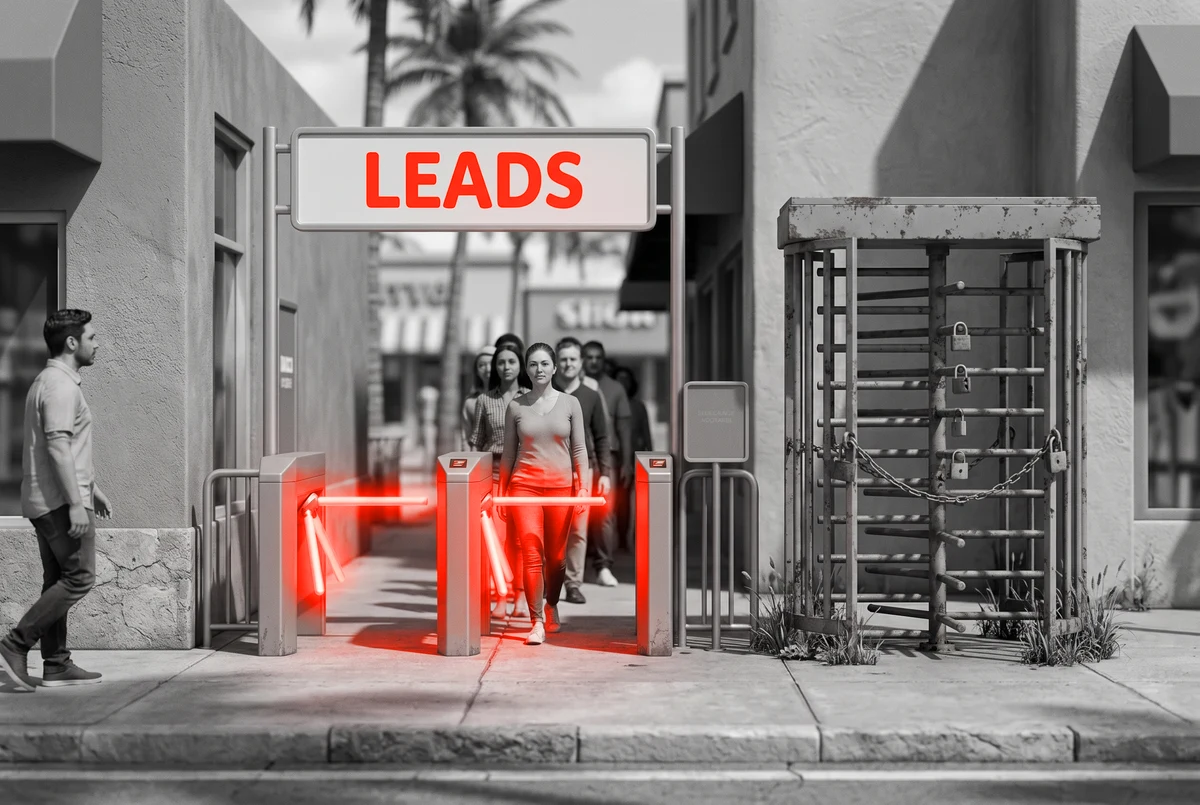
We decide which fields are necessary based on what the business will actually do with the information. Asking for a budget, location, service type or preferred appointment time only makes sense when that answer changes the next step.
- Clear labels and mobile-friendly field sizes
- Only the qualification fields the process can justify
- Useful validation and error messages
- Consent language and privacy-policy access
- A confirmation or thank-you experience after submission
The Conversion Experience Continues After Submit
A lead should not disappear into an inbox with no confirmation. The visitor needs to know that the request was received, what will happen next and when to expect a response.
Depending on the project, the landing page can connect the request to a CRM, scheduling platform, email sequence or routing workflow. More advanced follow-up belongs to Marketing Automation, but the page should still hand the lead off cleanly.
- Confirmation messaging
- Thank-you page
- CRM or email notification
- Lead-source capture
- Clear ownership of the next action
Built for the Device Where the Click Actually Happens
Mobile-first changes how information is prioritized, how quickly the offer becomes clear, and how easy it is to call, book, or complete a form with one hand.
We design the mobile experience from the beginning: readable headlines, intentional spacing, large interaction targets, short content blocks, visible calls to action and forms that do not feel like paperwork. Images and scripts are selected and implemented with performance in mind so the page does not waste paid traffic while heavy elements load.
Trust also needs to appear at the moment it is needed. Local information, reviews, credentials, process details, privacy language, recognizable tools and clear contact information can reduce uncertainty, but only when they are relevant and verifiable.
Speed Is a Conversion Feature
Google measures real load and stability through Core Web Vitals. Largest Contentful Paint tracks how fast the main content appears. Interaction to Next Paint measures how quickly the page answers a tap.
Cumulative Layout Shift catches content that jumps while the page settles. For paid traffic these metrics carry money, since every second of load time costs conversions and the useful threshold sits near two seconds.
We build the page to hit those marks before it ever runs traffic, so the offer loads while the visitor is still paying attention.
Know Which Campaigns Produce Calls, Forms and Bookings
A landing page should help the business understand which campaigns and messages create meaningful actions.

Conversion events we can configure
- Completed lead forms
- Confirmed appointment bookings
- Phone-number clicks and call-tracking events
- Purchases, registrations or downloads
- Thank-you page visits
Platforms and connections
- Google Analytics 4 and Google Tag Manager
- Google Ads conversion tracking
- Meta Pixel and campaign events
- HubSpot, Salesforce, Zoho and compatible CRMs
- Calendly, Zapier, Make and supported booking tools
How tamer Marketing Takes a Landing Page From Brief to Launch
Each stage resolves decisions that the next stage depends on. This keeps the project focused and prevents design from becoming a substitute for strategy.
Discovery and Campaign Review
We review the offer, target audience, traffic source, existing ads, current website, sales process and primary conversion goal. We also identify practical constraints such as launch timing, platform requirements, available brand assets and the systems that must receive the lead.
Messaging, Copy and Wireframe
We define the value proposition, message sequence, objections, trust elements and call to action. The copy is organized in a wireframe before visual design begins, allowing the structure to be reviewed without decorative decisions distracting from the conversion logic.
Custom Visual Design and Approval
The approved structure is translated into a branded desktop and mobile experience. We establish hierarchy, typography, spacing, imagery, interaction states and repeated CTA placement. Revisions are handled within the scope agreed at the beginning of the project.
Development and Integrations
We build the approved page in the selected environment, create the form and thank-you experience, and connect the required CRM, booking, analytics or advertising tools. The implementation is responsive and prepared for the campaign destination URL.
Quality Assurance, Tracking and Launch
Before publishing, we test the page across devices and browsers, submit every form, verify links, confirm notifications and validate the conversion events. After launch, an initial review can identify technical issues or clear opportunities. Ongoing experimentation is handled through Conversion Rate Optimization.
How We Use AI to Build Smarter Landing Pages
AI speeds up the parts of the work where speed helps: research, options, and analysis. Strategy, brand judgment, and quality control stay with the people who know your campaign.
We use AI to accelerate research, explore stronger messaging options, and support intelligent features on the page. Our strategists, writers, and designers make the final decisions on what ships.
A generic page produced from a prompt is a starting point at best. The offer, the audience, and the words that persuade them are choices that need a person who has read the campaign and understands the business.
We map intent, audience, and the objections that stop qualified visitors, in less time.
We review ads, keywords, and message match to find where the promise breaks.
We explore more options for headlines, offers, and calls to action before choosing one.
We test how the content is organized before design work begins.
The message can adapt to the campaign or audience that sent the visitor.
Assistants can answer questions on the page and qualify a lead before it reaches you.
We read how visitors behave on the page and surface opportunities to improve it.
Strategy, copy, design, and accuracy are reviewed by a person before launch.
Want AI to play a larger role in how the site itself is designed and produced? Visit AI Web Design.
What Is Defined Before the Work Begins
A landing page can be simple or technically involved. A clear scope protects the quality of the work and prevents both sides from discovering major assumptions halfway through the project.
Whether the project includes one page, separate campaign variants, English, Spanish or both.
Whether tamer Marketing writes the page from strategy or adapts approved client content.
The number of structured copy and design revisions included in the project.
Where the page will be built, hosted and maintained after launch.
The exact CRM, booking, analytics, advertising and call-tracking connections required.
Who provides logos, images, legal language, credentials, reviews and other proof.
Milestones, feedback expectations and any deadline tied to the campaign launch.
The support window included after publication and what moves into maintenance or CRO.
Do You Need a Landing Page or a Complete Website?
They solve different problems. A landing page is a focused destination for one campaign or offer. A website represents the broader business and supports multiple audiences, services and paths.
| Landing page | Complete website |
|---|---|
| Built around one campaign or offer | Represents the full business and its services |
| One primary conversion goal | Multiple visitor goals and navigation paths |
| Often receives paid, email or promotional traffic | Supports organic, direct, referral and branded traffic |
| Message closely matches a specific ad or audience | Messaging must serve a wider range of visitors |
| Focused measurement for one campaign | Broader analytics across many pages and journeys |
Need the complete site? Visit Custom Web Design. Need the campaigns that send the traffic? Visit PPC Management. Building with AI tools as part of the process is covered in AI Web Design.
Landing Page Design for Miami’s Bilingual Audience
Miami businesses often communicate with customers who search, compare and make decisions in both English and Spanish. A bilingual campaign requires more than translating the English page word for word.
The offer, headline, examples, tone and call to action may need to be adapted so both versions feel natural and persuasive. We can plan separate language experiences while preserving consistent tracking and campaign attribution.
Local considerations can include
- English and Spanish campaign variants
- Miami-Dade service-area relevance
- Click-to-call and appointment-focused actions
- Mobile-first layouts for local traffic
- Local trust signals and contact details
- Separate URLs or tracking by language when appropriate
tamer Marketing is based in Hialeah and serves businesses across Miami, Doral, Kendall, Coral Gables, Brickell, Aventura, Miami Lakes and South Florida.
Have a Campaign Ready but No Focused Destination?
We can turn the offer, audience and traffic source into a page designed around the action your campaign needs.
Discuss Your Landing PageFrequently Asked Questions About Landing Page Design
These answers clarify how the service differs from general web design, PPC management, automation and ongoing optimization.
What is a landing page?
Do I need a landing page if I already have a website?
What is the difference between landing page design and PPC management?
Do you provide the landing page copy?
Can you build landing pages for Google Ads and Meta Ads?
Can the landing page connect to my CRM or booking system?
Is conversion tracking included?
How much does landing page design cost?
Do you use AI to build the landing page?
How long does it take to design and build a landing page?
What happens after the page launches?
Will I own the landing page?
Can you create the page in English and Spanish?
Build the Page Your Campaign Actually Needs
Tell us what you are promoting, where the traffic will come from and what action you want visitors to take. We will use that context to define the right scope.