
See If Your Brand Gets Recommended with This Free AI Brand Visibility Checker

Every day, millions ask ChatGPT, Claude, Perplexity and Google's AI for recommendations. Are they finding you or your competitors? Check 2 AIs free, no email required.

If AI doesn't recommend you, you're invisible to your next customer.

Enter your brand and website to start tracking your AI visibility.

Enter your keyword or service

What is AI Visibility?

When someone asks ChatGPT, Perplexity or Gemini "who's the best [your service] in [your city]?", does your business show up? Unlike Google's 10 blue links, AI gives ONE conversational answer mentioning only a handful of brands. We map this shift, and what it means for local businesses, in our guide to SEO in the AI era.

AI Platform Growth+340%
800M+
ChatGPT
800MWeekly users
VS
Google
8.5BDaily searches
Your Visibility Odds
3-7

Brands/answer

50+

Competitors

<15%

Your odds

AI User Behavior
46%Use AI for purchases

AI adoption rate

ChatGPT
800M++340%
Perplexity
100M++180%
Gemini
50M++95%
Tracking StatusCMO Survey
16%
of brands track AI

The math is brutal: AI mentions only 3-7 brands per answer. If you're competing in a space with 50+ businesses, your odds of appearing in any single response are under 15%, unless you actively optimize for it.

How to use it

How to use the AI brand visibility checker

Three fields, one keyword, and about a minute. No account for the first run.

  1. Step 1

    Enter your brand and website

    The checker verifies the site exists and uses both to tell your brand apart from look-alike names in each answer.

  2. Step 2

    Pick the country, an optional city, and one service keyword

    Something a customer would actually type, like “personal injury lawyer” or “roofing company”. The location shapes the prompts the AIs get.

  3. Step 3

    Generate the queries and run the check

    The tool turns your keyword into the buyer prompts people ask AI assistants, you pick one (or write your own), and it runs it across the AI platforms.

What's in your free AI visibility report

  • The generated buyer prompts, editable and copyable
  • Each platform's full answer, with brand names highlighted
  • Whether your brand was mentioned, and in which position
  • Every competitor the AI recommended instead of you
  • The sources each AI cited, page by page
  • A JSON export of the whole run

Supported AI platforms

Six AI surfaces, one verdict. The first run covers two of them free with no email; unlock the other four with your address and the same query is re-run on every platform.

  • AI ModeGoogleFree run
  • PerplexityPerplexity AIFree run
  • ChatGPTOpenAIEmail unlock
  • ClaudeAnthropicEmail unlock
  • AI OverviewGoogleEmail unlock
  • GeminiGoogleEmail unlock

Microsoft Copilot is not covered yet. When it is, it will show up here first.

Discover How AI Platforms See Your Brand

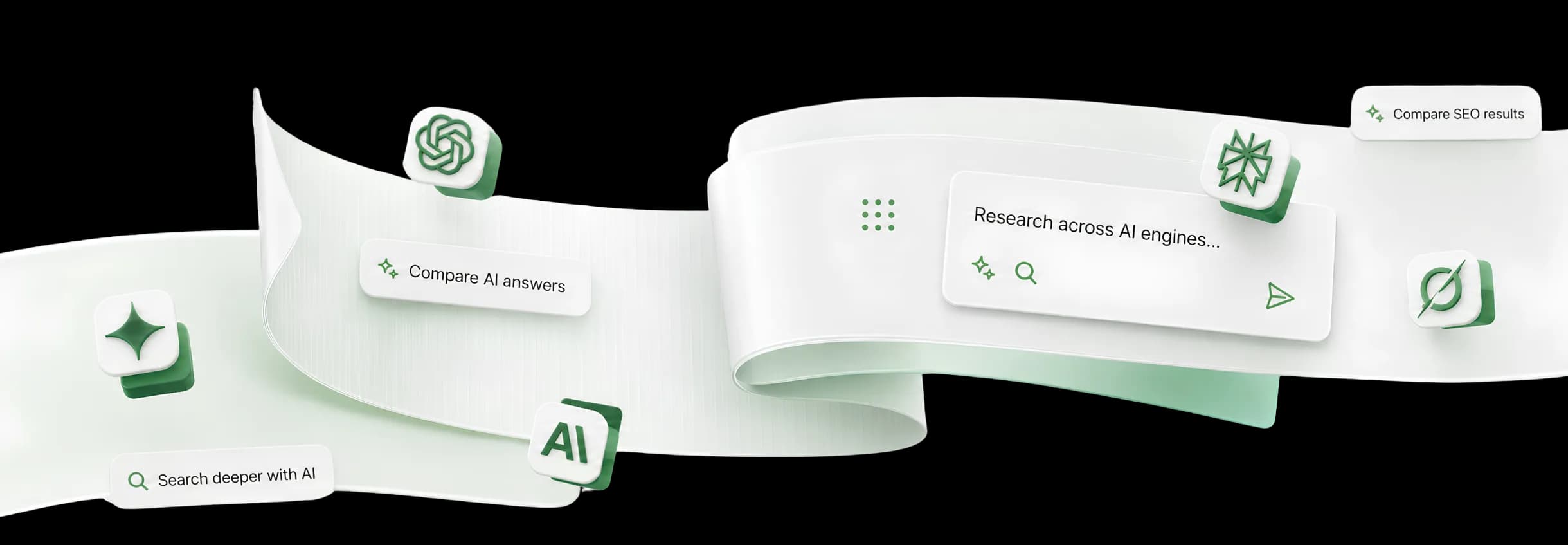
Understand your brand's presence across ChatGPT, Perplexity, Gemini and other AI search engines.

Multi-Platform Analysis: Check your visibility across all major AI assistants in one place

Real-Time Results: Get instant insights into how AI platforms currently recommend your brand

Competitor Tracking: See who AI recommends instead of you and identify opportunities

AI Visibility Dashboard showing brand mentions

Why Check Your AI Visibility?

57% of users now trust AI recommendations over traditional search. If AI doesn't mention your brand, you're invisible to your next customer.

Visibility Diagnosis

ChatGPT
Visible
Perplexity
Partial
Gemini
Not Found
Gap to industry avg:-18 pts

Reading the report

How to interpret your AI visibility results

Each platform card gives you a mention verdict, a position, the competitors it named and the sources it cited. Here is what each one means and what to fix first.

Strong, weak or missing AI presence

Mentioned in position 1 to 3 on most platforms means the AIs already treat you as a default answer for that prompt; protect it with fresh reviews and up-to-date pages.

Mentioned, but low or on one platform only means the signals exist but are thin. Look at which sources that platform cited and get yourself onto them.

Not mentioned anywhere is the common case. Start with the competitor list: the businesses the AI does name tell you which sources and profiles it trusts for your category.

AI mentions vs AI citations

A mention is your brand being named inside the answer. A citation is a page being linked as the source the answer was built from. You can be cited without being recommended, and recommended without a single link to your site.

Mentions win the customer. Citations tell you which pages, yours or third-party, the model is reading. The report separates both so you know whether to fix the answer or the evidence behind it.

Competitor AI visibility comparison

Every brand the AI recommended is listed with its position. Run the same prompt on two or three platforms and the names that repeat are your real AI-era competitors, whatever Google's organic results say. What they have in common (a directory listing, a review profile, a comparison article that names them) is your action plan.

Prompt opportunities and buyer intent

The generated queries are not keywords; they are the questions a buyer asks when deciding. Service prompts (“who does X in Y”), comparison prompts (“X vs Y”), local prompts (“best X near Z”) and decision prompts (“is X worth it”) each trigger different sources. Test the ones that match where your customers are stuck, not the highest-volume one.

Marketing strategy dashboard with AI insights

Turn AI Insights Into Marketing Strategy

Use data-driven insights to optimize your content and improve your AI search rankings. Improving these signals is exactly what our AI SEO services are built for.

Query Optimization: Discover the exact prompts that trigger AI recommendations for your industry

Content Gaps: Identify topics where you're missing AI visibility and opportunities

GEO Strategy: Build a Generative Engine Optimization strategy based on real data

From report to plan

How to improve your AI search visibility

AI assistants do not rank pages; they pick brands they can verify across the web. These are the sources that shape their answers, and the order we fix them in.

Sources that influence AI answers

Third-party citations and directories

Industry directories, chamber listings and “best of” roundups are the pages AIs read first when asked for a recommendation.

Reviews and ratings

Google, Yelp and vertical review sites give the model both the sentiment and the volume it needs to rank you above a competitor.

Authoritative pages that explain your service

Clear service pages and answer-shaped content are what gets cited. Vague copy gets skipped.

Local profiles and structured data

A complete Google Business Profile plus Organization and LocalBusiness schema confirm you are a real entity with a real address.

A GEO roadmap in six moves

  1. 01Strengthen entity signals: same name, address, phone and description everywhere the AI might read them.
  2. 02Answer the buyer prompts on your own pages, in the same words the report generated.
  3. 03Earn citations on the sources the report shows the AIs already trust for your category.
  4. 04Grow recent reviews; models weight freshness as much as volume.
  5. 05Add FAQ, Service and LocalBusiness schema so the facts are machine-readable.
  6. 06Refresh high-intent pages and re-run the check every month to measure the change.

Running this roadmap for you is what our AI SEO services are for.

Local AI visibility by city

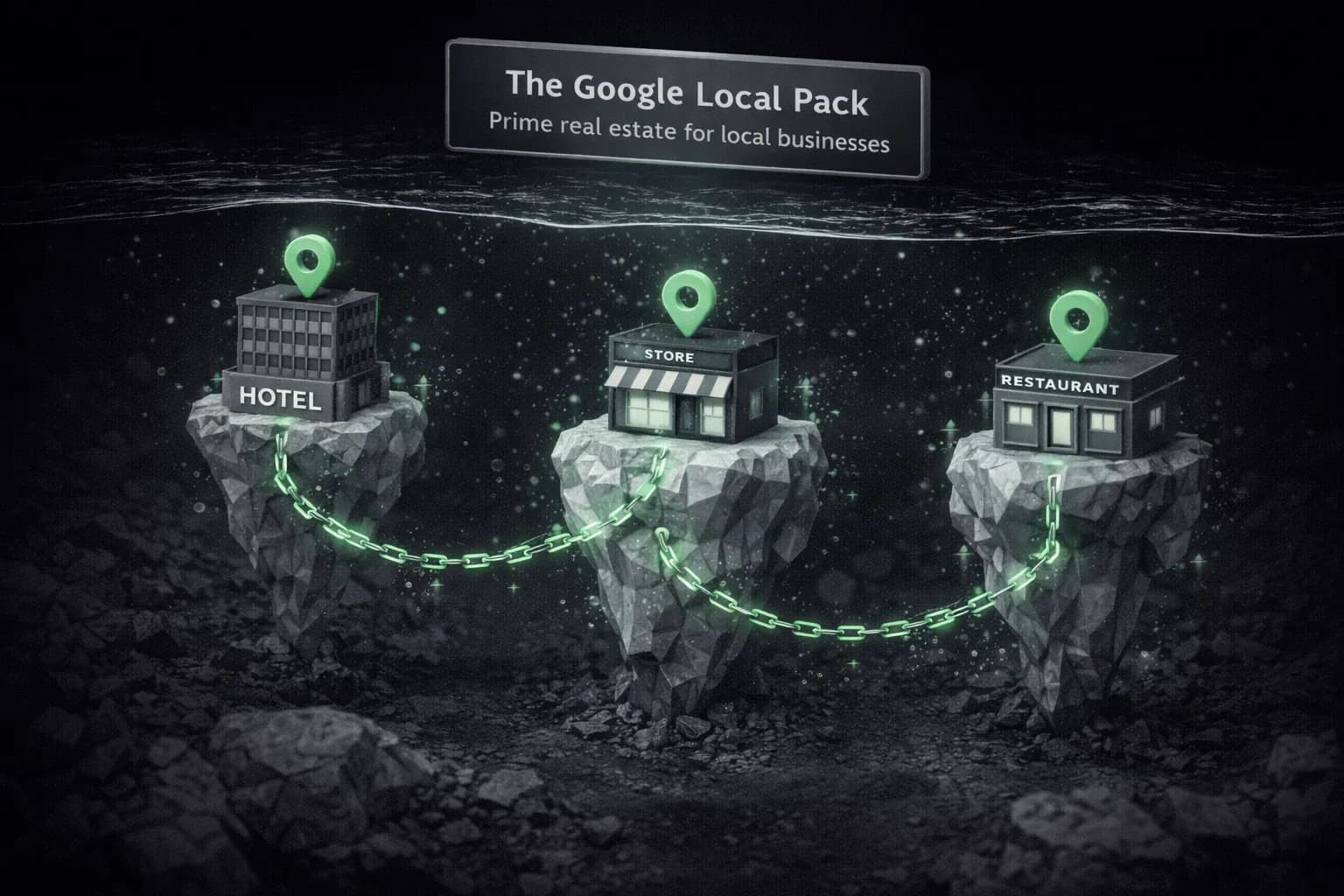
The country and city fields are the part most checkers skip. “Best personal injury lawyer in Miami” and the same prompt without the city produce different shortlists, because local prompts pull from Maps, review sites and city directories rather than national roundups.

Run your main service with your city first. If competitors from the next town over show up, the fix is usually your Business Profile and local citations, not your website.

Methodology

Why results vary, and how to read them anyway

Every run asks the live platforms your exact prompt and parses the real answer. Nothing is cached or simulated, which is also why two runs are rarely identical. Treat the report as a directional snapshot and track the trend.

Prompt wording
“best” and “affordable” pull different lists. Keep the wording fixed between runs.
Platform
Each model reads different sources and updates on its own schedule.
Location
The country and city you set change which local sources get consulted.
Timing
Answers drift week to week as sources and models update. Compare runs, not single results.
Model behavior
Some platforms randomize slightly between identical prompts. A repeat run is part of the method.
FAQ

AI visibility checker questions, answered

What people ask before and after their first run.

  • A tool that asks AI assistants the questions your customers ask, then reports whether your brand is named in the answer, in which position, which competitors were recommended instead, and which sources the AI cited. It measures AI search visibility the way a rank tracker measures Google.
  • Six surfaces: Google AI Mode and Perplexity on the free run, plus ChatGPT, Claude, Google AI Overview and Gemini once you unlock the full report with your email. Microsoft Copilot is not covered yet.
  • Yes. The first run needs no account and no email. Unlocking the remaining four platforms asks for an email so we can deliver the full report; there is no payment step.
  • Each run queries the live platforms with your exact prompt and parses the real answer, so what you see is what a user would have seen at that moment. AI answers change with wording, location, timing and model updates, which is why we recommend repeating the check monthly and comparing runs rather than trusting a single result.
  • Yes. Set the country and add a city, and the generated prompts become local (“best roofing company in Hialeah”). Local prompts pull from Maps, review sites and city directories, so results often differ from the national version of the same query.
  • A mention is your brand named in the answer. A citation is a page linked as the source the answer drew from. You can be cited without being recommended and recommended without being linked; the report shows both separately.
  • Look at the competitors the AI did name and the sources it cited. Those tell you which directories, review profiles and articles the model trusts for your category. Getting listed and reviewed there, and answering the same buyer prompts on your own pages, is the fastest path to a mention.
  • Google ranks pages for keywords; AI assistants recommend a handful of brands for a question and rarely show a list of ten. Being on page one of Google does not guarantee a mention in ChatGPT or Gemini, and the sources each relies on overlap only partly. This checker measures the second kind of visibility.