
Competitor Backlink Analysis: How to Find and Win Links

Summarize with AI

Picture a business that publishes solid pages every month, yet a few rivals keep holding the top results. This process shows you which websites link to those rivals but not to you. You can then judge each of those backlinks for quality and relevance. From there, you decide which link opportunities are worth pursuing.
The goal is to find where competitors earn their links and choose the doors you can also open. Out-earning them on link volume is not the target. Done well, this turns scattered link building into a clear, measurable SEO plan built around real backlink opportunities.
What Competitor Backlink Analysis Is and Why It Moves Rankings
Many businesses publish pages that never rank. The content is fine, but other sites backlink to their competitors more, and trust them more as a result. The process means studying the backlinks of sites that rank above you. You work backward from those backlinks to find link sources, content patterns, and realistic backlink opportunities.
The importance of backlinks in SEO goes back to Google's original PageRank algorithm. A backlink from another site acts as a vote of trust, authority, and relevance. Your backlink profile is the full set of those votes.
How backlinks impact rankings comes down to who is voting. Unique referring domains matter more than raw backlink counts, because many backlinks from one site add little. Backlinks also work alongside content quality and search intent, never alone.
Esto es why we set honest expectations. Closing a backlink gap can strengthen authority and relevance, but earning more backlinks does not guarantee higher rankings on its own. Movement depends on content, intent match, competition level, and overall site optimization, so we verify impact over time through rankings, organic traffic, and leads tracked together.
Competitor backlink profiles are useful because they show which sites in your niche already hand out backlinks and authority. The steps below turn that backlink data into rankings that produce leads.
Step 1: Identify Your Real Search Competitors
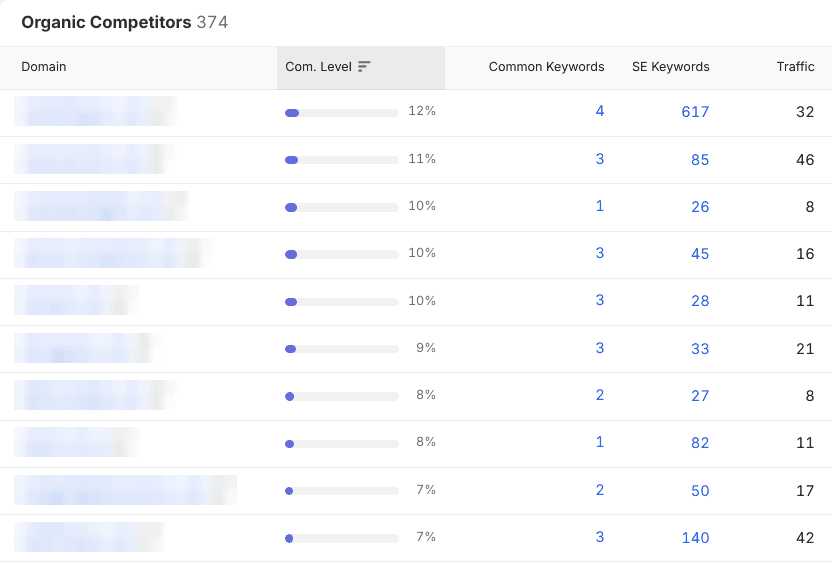
A common mistake is analyzing the rival you know from your market. Often, a different set of websites holds the search results you want. If you study the wrong SEO competitors, every later SEO decision builds on bad data.
Business Competitors vs. Search Competitors
Domain level competitors are the businesses you compete with for customers. Search competitors are the sites ranking for your target keywords, including long-tail keywords. The two lists overlap, but rarely match.
For informational queries, your search competitors can include publishers, review sites, directories, and even YouTube results. Those websites build authority differently from a local service business, and that matters for later decisions.
How to Find Them
Start with Google and a manual check:
- List your 10 to 20 most valuable keywords, mixing niche terms and location terms.
- Search each one and note the domains that appear on page one.
- Run the organic competitors report in Semrush or the competing domains report in Ahrefs to confirm the pattern.
- Collect the domains that show up most often.
This mix of manual searches and competitor keyword research gives you a list grounded in real results, not assumptions.
Pick 3 to 5 Competitors
We recommend anchoring the work on three to five competitors. Include one or two large players, plus smaller websites that outperform you on important keywords.
Smaller sites are often more useful. Their link building tactics are usually easier to replicate. These websites typically earned their visibility through local listings and niche sites. They also built relationships, and you can build similar ones yourself.
Start Your Tracking Sheet Now
Create a simple sheet with each competitor, the keywords they win, and their ranking page. This sheet later becomes your link tracking sheet, so outreach and results live in one place.
When you check their backlinks later, this list keeps you focused on the websites that actually stand between you and qualified leads. A correct list also means less wasted outreach budget.
You complete this step once you have three to five competitor domains, each tied to specific keywords they rank for.
Step 2: Compare the Backlink Metrics That Matter
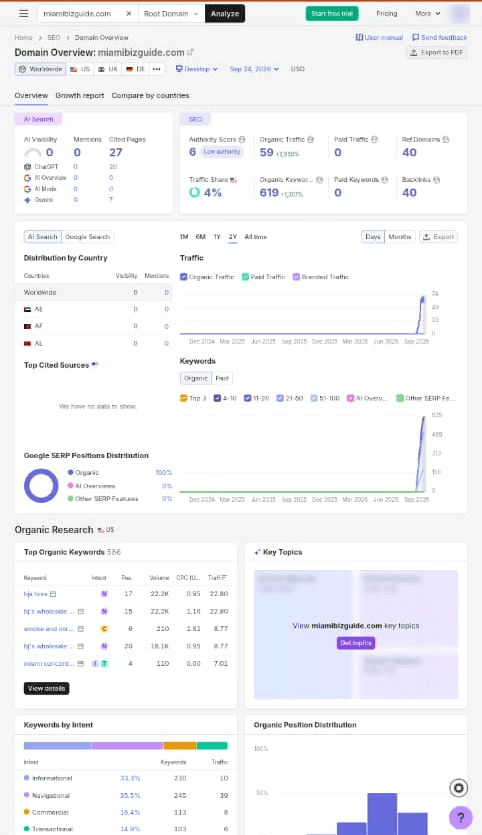
Teams often compare vanity backlink numbers that do not explain rankings. A competitor with a huge total backlink count may still be weaker than it looks. This step works when you weigh several backlink metrics together.
Referring Domains vs. Total Backlinks
Referring domains are the unique websites linking to a domain or URL. Five backlinks from five different sites pass far more authority than five backlinks from one site, because link equity, often called "link juice," is the value passed through a backlink, and it concentrates more heavily when it comes from a wider spread of independent linking domains.
The costliest mistake here is assuming a website has more authority because it has a large volume of inbound backlinks. A big share of those backlinks may come from irrelevant, spammy, or off-niche sources. Link quantity does not reflect real authority.
Authority Scores and What They Really Mean
Several backlink checker tools score websites with their own formulas:
- Domain Authority (DA) from Moz
- Domain Rating (DR) from Ahrefs
- Authority Score from Semrush
- Trust Flow (TF) and Citation Flow (CF) from Majestic
These are third-party SEO metrics. Google does not use them as ranking factors, and its own link spam policies focus on the quality and intent behind a backlink, not a vendor score. We treat domain authority and Domain Rating as supporting evidence, never as standalone criteria.
Relevance often beats the score. A lower-DA website can be worth more as a link source than a higher-DA website when it is closer to your topic and your geographic market. High-quality backlinks usually come from pages with organic traffic, strong topical fit, and few outbound links.
Link Attributes and Anchor Text
Record each backlink's rel attribute: dofollow, nofollow, sponsored, or ugc. Dofollow links pass PageRank directly. Nofollow is treated as a hint by Google, not a hard rule for crawling or indexing.
Sort anchor text into branded, exact-match, partial-match, and generic groups. A link profile packed with exact-match commercial anchors can signal risky or unnatural link building.
Link Velocity
Link velocity is the rate at which a competitor gains or loses backlinks. A sudden jump in new backlinks often exposes a PR push, a partnership, or a seasonal campaign.
Anchor text, referring domains, and link velocity help you spot patterns in how a rival earns backlinks. None of them decides on its own whether one backlink is worth pursuing.
Keep the Comparison Clean
Use the same backlink checker SEO tool for every competitor. Apply the same filters and date range as well. This keeps the metrics comparable across your sheet. The core data to pull includes:
- Total referring domains and their trend
- Authority score from one chosen backlink research tool
- Share of dofollow links
- Anchor text distribution
- New and lost backlinks over the same period
Clean comparisons lead to clearer budget decisions. Studying how competitors earn their backlinks has helped identify and secure relevant opportunities that had not been explored before. Even so, matching one new backlink to one ranking jump is not something we claim without data to back it up. This step is done once you record the same metrics for every competitor, side by side, in your sheet.
Step 3: Run a Backlink Gap Analysis to Find Shared Linkers
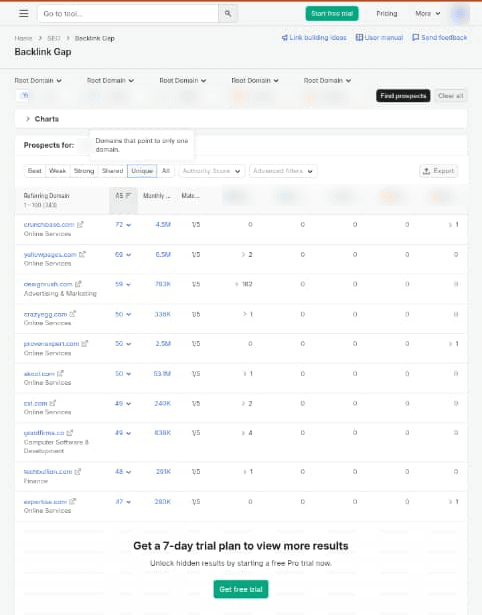
Long prospect lists full of websites that will never give you a backlink drain time and budget. A backlink gap analysis fixes this by narrowing the list to sites with a real reason to link to you.
A backlink gap analysis, also called a link-gap analysis, finds domains linking to multiple competitors but not to your website. These are high-probability opportunities. Ahrefs calls this feature Link Intersect, and Semrush calls it Backlink Gap.
The Walkthrough
- Enter your domain and your three to five competitors.
- Use views such as Best, Weak, and Unique to isolate domains linking to competitors but not to you.
- Filter to domains that link to at least two competitors.
- Remove spam, scraped directories, and Private Blog Networks (PBNs).
- Sort by relevance and authority instead of raw backlink count.
- Export the remaining domains to your tracking sheet.
Sites linking to two or more competitors matter for a simple reason: they cover your niche and have already shown they will link to businesses like yours. That makes them strong link building prospects, and often includes local directories, business listings, niche sites, and relevant publications.
Review Each Site by Hand
Backlink checker tools surface candidates, but a person must judge them. We review each potential linking site for topical, geographic, and commercial relevance, plus authority and likely value as a link source.
Backlink research tools also disagree. Referring domain counts and quality scores vary because each backlink database crawls the web differently. We do not treat those gaps as decisive. When an opportunity looks promising, visit the source website directly. Check the context there, then decide whether it fits the strategy.
Add the Page-Level Layer
For promising domains, record:
- The linking page URL
- The target URL on the competitor's website
- Placement and surrounding context
- Texto ancla
- Connection type: editorial, sponsored, user-generated, directory, or sitewide
- The likely reason the backlink exists
Use the Gap to Size Effort
The gap also helps with how to predict SEO campaign cost. Compare the referring domains of the top three ranking pages with your own page. That shows roughly how many quality backlinks you may need, which shapes budget and timeline. Treat it as an estimate, since relevance and content still drive results.
This method gives you a focused list of opportunities instead of a pile, built by comparing who links to your competitors against who links to you. A high DR alone does not confirm a backlink is worth pursuing; local relevance and topical fit decide that. This step is done once your sheet holds each shortlisted domain and its page-level details.
Step 4: Reverse-Engineer Why Competitors Earned Their Best Links
Teams often see a competitor's strong backlink and cannot work out how to earn something similar. Reverse engineering backlink profiles answers that by studying the origin site, the content around the backlink, and the nature of the link itself.
You cannot always know for certain how a competitor earned a given backlink. Still, the context usually points to a replicable tactic.
Group Their Best-Linked Pages by Format
Open the Best by links report in Ahrefs or the top pages report in Semrush. This shows the top linked-to competitor pages, the ones pulling in the most backlinks. Group them into clusters such as:
- Original research and statistics pages
- Templates and free tools
- Comparison guides and case studies
- News coverage
We recommend building a more useful or more original version rather than copying. This step also exposes content gaps and keyword gaps: topics competitors cover that attract backlinks and that your site does not address yet.
Identify the Tactic Behind Each Link
For each high-value backlink, work out where it likely came from. Common paths include an original data study or a founder quote through HARO or Connectively. Others include a paid partnership, an affiliate deal, or a product review. Guest posting and podcast or YouTube interviews are also common paths to new backlinks.
Three tactics deserve a closer look:
- Editorial opportunities: research the site's publishing criteria, find the right contact, and send a relevant pitch.
- Broken link building: find links pointing to 404 pages, check whether the original content can be recreated, build a better replacement, and ask the site owner to swap in your link.
- Digital PR: backlinks tied to media mentions, interviews, studies, and editorial collaborations.
Digital PR can earn strong backlinks, but it requires a developed content and communications strategy. Before pursuing it, make sure you have the data, spokespeople, and stories to support it.
Knowing the tactic tells you which backlinks are realistic for your budget. Replicating a competitor's approach only makes sense when the tactic fits your resources.
Read Recent and Lost Links
Sort links by first seen date. Recent backlinks reveal active publications, journalists, partnerships, or campaigns your competitors are using right now to earn new backlinks.
Then review lost links. These often point to pages that need replacement outreach, redirects, or updated content, and a lost competitor backlink can become your opening to earn that same placement.
This turns effort without a system into a repeatable method. You complete this step once you attach a likely tactic to each high-value backlink in your sheet.
Step 5: Prioritize Targets and Turn Them Into Outreach
A strong prospect list is worth nothing if nobody follows up. This is where most link building strategies break down: teams finish the research, but they never follow up with outreach consistently.
Score Each Opportunity
Rate every target from 1 to 3 on five criteria:
- Relevance: how closely the site matches your topic and market
- Authority: supporting metrics and real organic traffic
- Editorial fit: whether the site has a credible reason to cite your page
- Acquisition feasibility: how realistic the opportunity is for your resources
- Competitive overlap: how many competitors the site already connects to
The highest scores go to sites that connect to multiple competitors, cover your topic, and have a clear reason to reference you.
Choose the Acquisition Path
For each target, decide how you will earn the placement. Most fall into one of three paths: a listing submission, an inclusion request, or an editorial collaboration pitch.
Ethical tactics that work well include:
- Publishing original research
- Reclaiming unlinked brand mentions
- Replacing broken competitor resources with better pages
- Pitching journalists with newsworthy findings
- Building relationships with experts in your field
Start With Unlinked Mentions
Unlinked brand mentions are among the easiest wins. Look for pages that mention you without a connection, or that mention competitors and leave you out. Find them with brand alerts or the content explorer in Ahrefs or Semrush.
Find the Right Contact
Finding email addresses for outreach starts with author pages and the site's contact page. Email finder tools help when those come up empty. A named editor usually responds better than a generic inbox.
Track Every Conversation
Keep one link tracking sheet with status, contact date, and next follow-up. Contact site owners, submit the pitch, and follow up until you get an answer. Outreach fails most often in the follow-up.
We automate follow-up so prospects do not go cold, and every campaign stays visible in one place. That is how high-quality placements become a system instead of a side task.
You know this step is done when every scored target has an acquisition path, a contact, and a scheduled follow-up.
If you want a head start, ask tamer Marketing for a prioritized link gap review of your top three competitors.
Backlink Checker Tool Comparison: Free and Paid Options
Many businesses pay for SEO tools that duplicate each other, or rely on free data that hides half the picture. A quick look at the main checkers helps you pick a lean SEO stack for your own research.
- Ahrefs: deep index and Site Explorer, with Link Intersect for gaps and DR as its key metric.
- Semrush: an all-round competitor suite with a competitive analysis feature, Backlink Gap, and Authority Score.
- Moz Link Explorer: DA and spam score; Moz's Link Explorer gives you 10 free queries a month.
- Majestic: Trust Flow and Citation Flow for reading link quality patterns.
- SE Ranking: a budget-friendly all-in-one checker option.
- GSC: shows backlinks to your own website only.
For a first look at three to five competitors, a free backlink checker and the limited free queries in Semrush and Moz are enough. A free backlink checker usually shows a domain's top 100 inbound backlinks, often one result per linking domain.
The Links report in Google Search Console shows a sample of your own inbound backlinks, not a complete inventory. It only covers properties you can access, so it cannot show data on rival domains.
Index size and crawl freshness vary by tool, so the same website shows a different count in each one. Stick to one checker for comparisons. AI agents can speed up exporting and sorting the data, but judging fit still needs a person.
Start with a free tool, then add one paid option once the data drives real outreach and measurable ROI. Pairing this with a full site audit helps you confirm the gains show up in rankings and organic traffic, not just in a dashboard.
Common Mistakes and How to Keep the System Running
What is competitor backlink analysis? Competitor backlink analysis is the process of reverse-engineering the inbound links of sites ranking above you to find link sources, content patterns, and realistic opportunities. It shows which websites link to rivals but not to you, so we can judge which of those sources are worth pursuing based on quality and relevance rather than chasing raw link volume.
How do I find my competitor's backlinks? We start by identifying real search competitors through manual Google searches on our 10 to 20 most valuable keywords, then confirm the pattern with the organic competitors report in Semrush or the competing domains report in Ahrefs. From there, a backlink gap analysis using Link Intersect or Backlink Gap finds domains linking to multiple competitors but not to us.
Why is analyzing competitor backlinks important for SEO? Analyzing competitor backlinks matters because it shows which sites in a niche already hand out authority, turning scattered link building into a clear, measurable plan. Backlinks act as votes of trust, authority, and relevance, and unique referring domains matter more than raw link counts. Closing a backlink gap can strengthen authority, though it does not guarantee higher rankings on its own.
How many backlinks does a competitor need to outrank me? There is no fixed number, but comparing the referring domains of the top three ranking pages with your own page gives a rough estimate of how many quality links you may need. This shapes budget and timeline and should be treated as an estimate, since relevance and content quality still drive results alongside links.
Does backlink analysis help with link building strategy? Yes, backlink analysis directly feeds link building strategy by narrowing long prospect lists into sites with a real reason to link to you. Reviewing referring domains, authority scores, anchor text, link velocity, and the tactic behind each competitor's best links turns research into a focused, repeatable outreach plan instead of a pile of unqualified prospects.
This kind of research loses value fast if it lives in a spreadsheet nobody opens again. Treat it as an ongoing part of your link building work, not a one-time project.
If your team generates leads but struggles to turn visibility into booked work, a free Miami digital marketing plan from tamer Marketing can show where links fit into the bigger picture, alongside content, technical SEO, and outreach already in motion.
Frequently asked questions
What is competitor backlink analysis?
Competitor backlink analysis is the process of reverse-engineering the inbound link profiles of the sites ranking above you. It shows where their links come from, which content earns those links, and which opportunities are realistic for your own site. We use it to replace guesswork with a plan. Instead of pitching random websites, we focus outreach on domains that already link to businesses like yours and have a clear reason to reference your content. The result is a prioritized list of link targets, content ideas, and acquisition tactics that we can execute, track, and measure month over month.
What is the best free tool for competitor backlink analysis?
For a quick first look, the free Ahrefs backlink checker shows a competitor's top referring domains, most-linked pages, and anchor text. Moz Link Explorer and Semrush also offer limited free queries, which is enough to spot patterns across three to five competitors. Google Search Console is useful for your own site, but its Links report is a sample and only covers properties you can access, so it cannot show a competitor's profile. Once you need full link gap reports, historical data, and advanced filters, a paid plan from Ahrefs or Semrush usually pays for itself in saved hours.
How many backlinks does a competitor need to outrank me?
There is no fixed number, because rankings depend on relevance, content quality, and search intent as well as links. We focus on referring domains, since unique linking sites correlate more closely with rankings than raw backlink totals. A practical benchmark is the median number of referring domains pointing to the top three pages for your target keyword, plus the monthly rate at which those pages gain new domains. Comparing that figure with your own page shows how much link building is realistically needed, and it helps estimate the cost and timeline of an SEO campaign before you commit budget.
Can I use competitor backlinks for my own site?
You can use them as a map, but you cannot copy them directly. A link exists because a site owner chose to reference a specific page, so the goal is to give that same site a stronger reason to reference yours. In practice, that means publishing a more useful resource, offering fresher data, suggesting a replacement for a broken link, or pitching a relevant expert quote. We skip links from private blog networks, comment spam, and paid placements, since replicating them adds risk to your site without adding real authority or qualified traffic.
Why is analyzing competitor backlinks important for SEO?
Links remain one of the strongest signals Google uses to judge trust and authority, a principle that goes back to the original PageRank algorithm. A Backlinko study of 11.8 million search results found the first result had 3.8 times more backlinks than positions two through ten. Analyzing competitors shows which sites drive authority in your niche, which content formats attract links, and how quickly top pages keep growing. That turns link building from scattered effort into a focused plan connected to rankings, organic traffic, and qualified leads for your business.
Does backlink analysis help with link building strategy?
Yes. It tells you who to contact, what to offer them, and in what order. Domains that link to two or more of your competitors are the highest-probability targets, because they already cover your topic and link to businesses like yours. The competitor pages that attract the most links show which formats earn citations in your industry, such as original research, statistics pages, or free tools. With those inputs, we build a scored prospect list, a content plan, and an outreach calendar, then track results so every new campaign starts with better data.